TL;DR
- To get Facebook and social ad leads into a CRM, send ad clicks to a form that creates a lead, or export leads from the ad platform and import them as CSV.
- CrmLeaf Basic ($9 per user per month, $8.10 annual) includes a hosted web-to-lead form with reCAPTCHA, email de-duplication, custom fields and CSV import. It creates a lead and a deal.
- CrmLeaf does not have a documented direct connection to Facebook lead forms or other ad platforms. It does not score leads automatically, and it has no SMS sequences.
- The MapleCare Health case study on this page was not a verified customer story. It is now a labelled example scenario with no results.
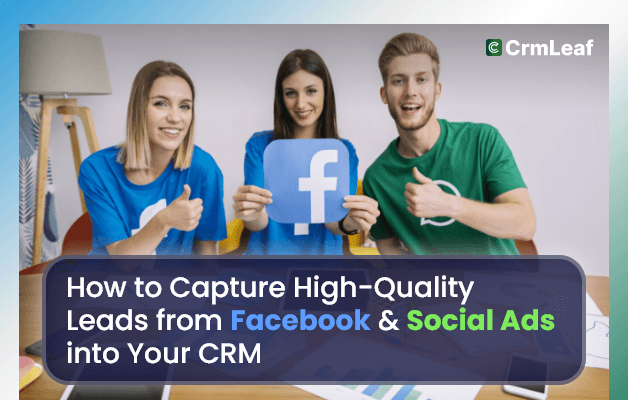
Social ads can fill your CRM with leads, but quality depends on the form, the follow-up speed and the clean-up that comes next. Plans and prices were checked on 4 November 2026.
Social media ads can be one of the busiest lead sources for small and mid-sized businesses, because large audiences use these platforms every day. Yet many teams struggle to turn clicks into useful CRM records. Leads sit in the ad platform, nobody follows up quickly and nobody knows which campaign produced a sale.
This guide gives you proven habits for creating, targeting and tracking Facebook and social ads that feed your CRM. It also shows exactly what CrmLeaf can and cannot do for this job. We make CrmLeaf, so we label each feature with its plan.
Why It Matters for Business Growth
Getting leads is not enough. Quality matters as much as quantity. For sales teams, operations managers and finance leads, a steady flow of relevant contacts means a stronger pipeline and more predictable revenue.
Scalable Growth
Use ad targeting to reach specific industries, such as professional services, retail or manufacturing. Then make sure every lead that arrives in your CRM carries the right source and category, so you can see which audience produces good deals.
Data-Driven Decisions
Each lead should arrive with a source, an owner and a next step. In CrmLeaf, the web-to-lead form creates a lead and a deal and removes duplicates by email. Scoring is manual: you rank leads using stages, categories and notes. CrmLeaf does not apply automatic lead scores or route leads by rules without Premium Workflow Automation.
Aligned Teams
Marketing, sales and finance work better when they share one record. Marketing sees which campaigns led to deals. Sales sees where each lead came from. Finance sees which won deals turn into invoices, which is a Pro feature in CrmLeaf.
Real Example
Example scenario (illustrative, not a customer). A boutique retailer runs a VIP offer on social media. Enquiries arrive through a form and become leads with a source of "social ad". The owner follows up the same day by email from the CRM. Each reply stays on the lead, so the next person can pick up the thread.
For the pipeline side of this flow, see the guide on what lead management is and why sales teams need it.
Best Practices for Facebook & Social Ads + CRM
1. Define Your Ideal Customer Profile (ICP)
Why it matters: it aligns ad targeting with conversion goals.
How: use past won deals in your CRM to find the industries, company sizes and job titles that buy.
CrmLeaf advantage: lead and deal reports (with average deal size and export) show which segments win. Categories on leads help you group them.
2. Craft Ad Creative That Speaks to Pain Points
Why it matters: attention spans are short.
How: lead with a real problem your buyers have and a clear next step. Use clean visuals and a short headline.
CrmLeaf advantage: store client notes and feedback on the client record, so you can reuse real language with the customer's permission. Never invent quotes.
3. Use Facebook Lead Forms with Custom Fields
Why it matters: short forms collect key data with little friction.
How: ask for name, company, email and one qualifying question, such as team size.
CrmLeaf advantage: two routes work today. You can send ad traffic to a landing page that holds the CrmLeaf web-to-lead form, which supports custom fields. Or you can export leads from the ad platform and bring them in through the CSV import. We do not document a direct, automatic link from Facebook lead forms into CrmLeaf. Ask us if that is a must-have for you.
4. Implement Lead Scoring & Qualification
Why it matters: it helps you focus on sales-ready leads.
How: decide which answers and actions matter most, such as a budget answer or a demo request.
CrmLeaf advantage: you rank leads by hand, using stages, categories and notes. CrmLeaf does not score leads automatically from ad engagement or page visits.
5. Automate Follow-Up Workflows
Why it matters: speed matters in lead nurturing.
How: reply within the same working day and set the next task before you close the lead.
CrmLeaf advantage: you can send email from the deal through Gmail, Outlook or IMAP, and replies sync back. In Premium, Workflow Automation can create a follow-up task or send an email when a lead record meets a rule. We do not document SMS sequences.
6. Test, Measure & Optimize
Why it matters: it improves cost efficiency.
How: test one thing at a time, such as the headline, the audience or the offer.
CrmLeaf advantage: match each campaign to leads, won deals and deal value in the CrmLeaf reports. Cost per lead comes from the ad platform, so keep that number in your own sheet next to the CRM export.
7. Sync Paid and Organic Campaigns
Why it matters: it supports brand recall.
How: retarget site visitors and video viewers with the ad platform's own pixel and audiences.
CrmLeaf advantage: CrmLeaf does not run retargeting. Use the lead source field to keep paid and organic leads apart, so you can compare their win rates.
Next step: build the form and the follow-up task in one afternoon. Start a 15-day free trial, no card needed.
8. Monitor Compliance and Privacy
Why it matters: it helps you avoid legal problems.
How: make sure your opt-in wording meets the rules that apply to you, such as GDPR or CCPA, and store proof of consent.
CrmLeaf advantage: add a consent field to the lead form and keep notes on each lead. The responsibility for lawful consent stays with your business. CrmLeaf does not guarantee compliance. For security details, read the CrmLeaf security page.
Example Scenario: Healthcare Provider
Example scenario (illustrative, not a customer). The company named in this heading was not a verified CrmLeaf customer, so we have removed the lead counts, percentages and quotes that used to appear here. The steps below show the pattern a healthcare provider could follow.
- Run a campaign for one clear service, such as senior wellness checkups.
- Send ad traffic to a form that creates a lead and a follow-up task.
- Assign each lead to a named care coordinator.
- Track enquiries, bookings and lead sources in reports.
Measure your own baseline first: leads per week, time to first reply and bookings per 100 leads. Compare after 90 days. A note for health providers: CrmLeaf does not claim HIPAA compliance, so keep clinical details out of lead notes. For real stories, see the customers page.
Final Takeaways
Running Facebook and social ad campaigns is only step one. With a CRM, you can:
- Capture leads through a web-to-lead form or a CSV import.
- Qualify them by hand with stages, categories and notes.
- Speed up replies with email from the deal and Premium workflow rules.
- Compare lead sources against won deals in reports.
Pick one campaign, one form and one follow-up rule, and measure for a month. Compare plans on the CrmLeaf pricing page or start a free trial.
Sources
- CrmLeaf pricing page, checked 4 November 2026.
- CrmLeaf lead management feature page, checked 4 November 2026.
- CrmLeaf integrations page, checked 4 November 2026.
Plans and prices checked on the CrmLeaf pricing page on 4 November 2026. Facts checked against CrmLeaf pricing and product documentation.