
Managing people is complex. Every HR team faces obstacles that drain time, cost money, and frustrate employees. Many organizations still rely on spreadsheets, email threads, and manual processes. As a result, these outdated approaches create errors, missed deadlines, and compliance risks. Fortunately, the solution is clear: modern HRMS software eliminates these pain points. Specifically, a comprehensive human resources management system automates workflows, centralizes data, and gives your team visibility into every HR function.
Moreover, this guide reveals eight critical HR challenges and shows exactly how smart HRMS technology solves them. Whether you manage 50 employees or 500, these challenges likely sound familiar. Therefore, keep reading to discover proven solutions that top companies use every day.
1. Manual Payroll Processing Errors
Payroll mistakes are expensive and embarrassing. Payroll automation is the proven fix. For instance, a single calculation error frustrates employees and creates accounting headaches. Many HR teams still process payroll manually using spreadsheets.
Learn why manual payroll processing is costing you more than you think. Here’s the problem: humans make mistakes. In fact, studies show that 67% of HR teams say manual payroll processing is their biggest time drain.
Moreover, overtime calculations, tax deductions, and statutory compliance requirements compound the challenge. Indeed, one misplaced decimal point can trigger employee disputes and regulatory audits. Staying payroll audit-ready is critical for every business.
However, smart HRMS software automates the entire payroll process. The system calculates gross pay, deductions, and taxes automatically. Payroll integration ensures accuracy and saves hours every month. SMB payroll challenges are real, but technology solves them.
Real-world example: A manufacturing company with 200 employees processed payroll manually each month. Processing took two full days and still produced errors. After implementing HRMS, they automated payroll. Now it takes 2 hours. Accuracy improved to 99.9%, and employees receive pay on time every cycle. The payoff is immediate: fewer errors, faster processing, happier employees, and compliance with tax laws.
2. Tracking Employee Attendance Across Locations
Managing attendance is tedious when teams work across multiple offices or remotely. Specifically, spreadsheets and manual tracking create inconsistencies. Managers struggle to monitor who’s present and when. The challenge intensifies with remote and hybrid work. Managing remote teams attendance and time tracking requires a systematic approach.
For example, employees work from home, co-working spaces, and client sites. Consequently, tracking becomes a guessing game. Furthermore, manual timesheets are easy to falsify. As a result, managers can’t enforce attendance policies consistently.
An integrated HRMS system with attendance tracking solves this instantly. Employees clock in via mobile app or biometric systems. Real-time dashboards show who’s present across all locations. Automatic alerts notify managers of absences or late arrivals. Real-world example: A tech company with offices in three cities struggled with attendance visibility. Their manual system was unreliable. Teams didn’t know who was in the office. With HRMS attendance features, they gained complete visibility. Managers see real-time attendance across all locations. Late arrivals trigger automatic notifications.
Result: Better accountability, reduced untracked absences, and clearer enforcement of policies.
3. Slow and Disorganized Recruitment
Hiring the right person takes months without proper systems. Candidates slip through the cracks. Interview schedules conflict. Offers sit unsigned. Recruiters spend hours chasing emails and updating spreadsheets. The recruitment pipeline is broken in most organizations. Candidates submit applications via email. Resumes pile up in inboxes. No one tracks where each candidate stands. Top talent moves on to companies with faster processes.
A modern recruiting software module within your HRMS streamlines everything. Specifically, candidates apply through a centralized portal. Furthermore, the system tracks every candidate automatically. Moreover, managers see the pipeline in one dashboard. Furthermore, automated workflows move candidates through stages seamlessly. You can also automate candidate screening and shortlisting to save even more time. Real-world example: An IT staffing company took 45 days to fill positions on average.
Their spreadsheet-based system was chaotic. Candidates never knew their status. After adopting HRMS with recruiting features, their time-to-hire dropped to 18 days. Notably, candidates receive automated updates. Managers see the full pipeline in real time. Ultimately, faster hiring means better candidates, reduced vacancy costs, and stronger team growth. Track recruitment KPIs to continuously improve your hiring process.
4. Poor Employee Data Management
Employee information scattered across systems is a headache. Personal details live in spreadsheets. Certifications and documents are filed in random folders. No one has a complete view of each employee’s profile. This creates real problems. For instance, HR can’t quickly answer questions about employee qualifications. Compliance audits reveal missing documentation. Additionally, employees repeat themselves when answering questions. Data inconsistencies cause payroll errors and benefit complications.
A centralized employee management system within HRMS consolidates everything. Specifically, one secure platform stores all employee data. In addition, certifications, documents, emergency contacts, and performance history live in one place. Additionally, managers access the information they need instantly. Furthermore, data stays consistent across all systems.
Real-world example: A manufacturing plant with 300 employees stored employee data across five different systems. Finding certifications took hours. During safety audits, they scrambled to compile required documents. With a unified HRMS, all employee information lives in one secure location. Specifically, managers find certifications instantly.
As a result, audits are smooth because all documentation is organized and current. Overall, centralized data saves time and reduces compliance risk.
5. Compliance and Policy Enforcement Gaps
Notably, employment law changes constantly. Wage and hour regulations, leave policies, and safety requirements vary by location. Understanding payroll compliance laws is essential for every business.
Most HR teams struggle to keep policies current and enforce them consistently. Without enforcement, problems emerge. Understanding HR compliance and costly payroll mistakes to avoid helps teams stay protected. For example, some employees get benefits others don’t. Furthermore, leave tracking becomes unfair. Moreover, wage and hour violations create legal exposure. Additionally, audits reveal non-compliance with regulations.
Smart HRMS software automates compliance. Specifically, the system enforces policies consistently. In particular, leave balances calculate automatically based on legal requirements. Role-based permissions ensure only authorized employees approve sensitive transactions.
Compliance logs track every action for audits. Real-world example: A retail chain with 50 locations struggled with leave policy enforcement. Different managers interpreted policies differently. Some employees received benefits others didn’t. This created legal risk. After implementing HRMS, the system enforces leave policies uniformly across all locations. Compliance logs prove consistent application of rules.
As a result, consistent enforcement protects the company and improves employee trust. Discover how an integrated HRMS keeps your people and payroll in sync.
6. Lack of Employee Self-Service Options
Employees depend on HR for simple tasks. They email to request time off. Additionally, employees call to ask about benefits. Consequently, HR spends hours answering repetitive questions instead of strategic work. This frustrates both groups. For instance, employees wait for simple approvals. Similarly, HR wastes time on administrative tasks. The company loses productivity and employee satisfaction suffers.
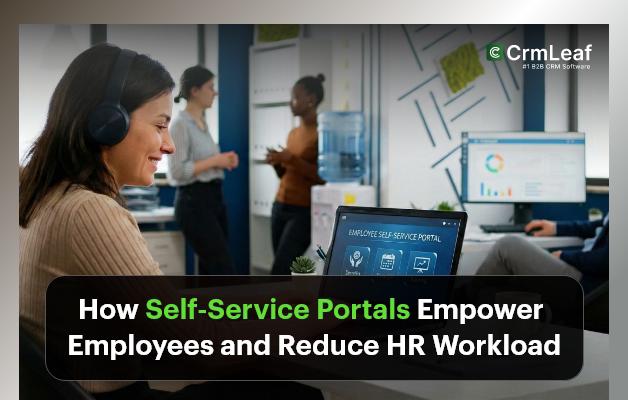
A robust employee self-service portal within HRMS empowers employees. They submit leave requests directly. Furthermore, employees update personal information themselves. In addition, they access pay stubs and benefits information anytime.
HR approves requests in the system instead of managing emails. Real-world example: An agency with 80 employees fielded dozens of leave requests via email every month. Tracking was chaotic. Employees waited days for approvals. With HRMS self-service, employees submit requests in the system. Specifically, managers approve with one click.
Furthermore, employees see status in real time. As a result, HR freed up 5 hours per week. Overall, self-service reduces HR workload and improves employee experience.
7. Disconnected HR and Payroll Systems
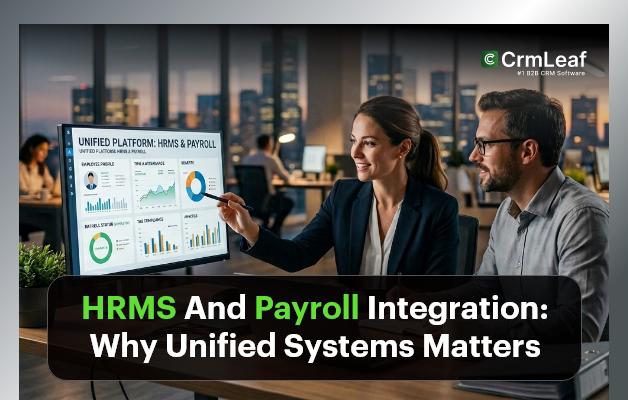
HR and payroll systems that don’t communicate create nightmares. Payroll-HRMS integration explains why unified systems matter for modern businesses. Employee changes in HR don’t sync to payroll. Consequently, payroll runs with outdated information. Moreover, mistakes multiply because systems disagree. Payroll integration with HR and finance dramatically boosts efficiency. Data entry happens twice without it. Someone updates the HR system, then someone else updates payroll manually. As a result, changes get lost. Furthermore, reconciliation is painful. Auditors find discrepancies.
An integrated payroll system within your HRMS eliminates this problem. For example, when you update an employee’s salary, payroll updates automatically. Equally, new hires sync instantly. Similarly, terminations process across both systems. Data stays consistent everywhere.
Real-world example: A professional services firm with 150 employees used separate HR and payroll systems. A manager updated an employee’s salary in HR. Payroll processed the old amount. The employee’s check was wrong. These mistakes happened monthly.
After unifying on one HRMS platform, salary changes sync instantly. No more duplicate work or errors. Integration eliminates errors and saves hours of reconciliation work.
8. No Real-Time HR Analytics and Reporting
Without proper analytics, HR leaders fly blind. They can’t answer basic questions about their workforce. How many employees will leave this year? Which departments have the highest turnover? Are we spending too much on hiring? Spreadsheet-based reporting is slow and error-prone. Reports take days to compile. By the time you get answers, the data is outdated.
Decision-making suffers because insights aren’t available when needed. Modern HR analytics and reporting features in HRMS software provide instant insights. Specifically, these tools help HR teams make smarter decisions.
Specifically, dashboards show key metrics in real time. Real-time payroll dashboards also drive strategic insights for leadership. Turnover rates, cost per hire, and vacancy duration are visible instantly. Learn about the real-time business KPIs every SMB should track.
Furthermore, custom reports answer specific questions. Indeed, predictive analytics highlight risks before they become problems. Real-world example: A tech startup with 120 employees had no visibility into their workforce metrics. HR made hiring decisions based on gut feel, not data.
As a result, this led to overstaffing in some departments and understaffing in others. With HRMS analytics, they see real-time metrics. Turnover by department, cost per hire, and time-to-fill are visible. As a result, HR now makes data-driven decisions. Overall, real-time analytics transform HR from reactive to strategic.
Why Choose a Complete HRMS Solution?
Addressing each challenge separately requires multiple tools. That means integrations, data syncing, and training across different platforms. However, a complete HRMS solution is simpler and more powerful. An integrated system:
- Eliminates data silos by centralizing all information
- Reduces errors through automated workflows
- Saves time by removing manual processes
- Improves compliance through built-in policy enforcement
- Provides real-time insights through comprehensive analytics
- Enhances employee experience through self-service options
- Scales with your company as you grow
The best HRMS solutions offer all features in one platform. Employee management, time tracking, recruiting, payroll, and analytics work together seamlessly. This integration creates efficiency that siloed tools can’t match.
Getting Started with HRMS
The journey from broken processes to streamlined HR operations starts with one step. Evaluate your current challenges. Identify which areas waste the most time and create the most errors. Look for an HRMS solution that addresses your top pain points. A good platform should be intuitive for employees and managers. It should integrate with your existing tools. It should scale as your company grows.
Therefore, take action today. Try it free with a platform that companies trust. CRMLeaf’s HRMS solution solves all eight challenges we discussed. Start your free trial and see how much time you can save. Your team deserves better tools. Moreover, your employees deserve a better experience. Modern HRMS software makes both happen.
Final Thoughts:
The eight HR challenges we discussed are common, but they don’t have to be permanent. Smart HRMS software eliminates each one. From payroll accuracy to real-time analytics, a modern system transforms how you manage people. Indeed, the ROI becomes clear within the first few months.
Explore the future of payroll automation, compliance, and employee experience. Discover CRMLeaf’s complete HRMS solution today and take the first step toward HR excellence.
Frequently Asked Questions About HRMS
1. What is HRMS and how does it differ from traditional HR management?
HRMS (Human Resources Management System) is digital software that automates HR processes. Traditional HR management relies on spreadsheets and manual work. HRMS automates payroll, attendance, recruiting, and analytics. It centralizes employee data in one secure location. The system enforces policies consistently. Traditional methods are slow, error-prone, and not scalable. HRMS saves time, reduces errors, and provides real-time insights.
2. How much time can HRMS save my HR team?
The time savings depend on your current processes and company size. Most organizations report saving 5-15 hours per week after implementing HRMS. Payroll processing, attendance tracking, and leave management are especially time-intensive tasks that HRMS automates. Larger organizations with complex processes see even greater savings. CRMLeaf customers report an average of 30% reduction in administrative HR tasks within the first three months.
3. Is HRMS secure for storing sensitive employee data?
Yes, modern HRMS solutions use enterprise-grade security. Data is encrypted both in transit and at rest. Role-based access controls limit who sees sensitive information. Regular security audits ensure compliance with data protection regulations. Backup systems protect against data loss. Audit logs track all access to employee information. CRMLeaf’s HRMS platform meets industry security standards for handling sensitive employee information.
4. Can HRMS integrate with our existing payroll and accounting software?
Most modern HRMS solutions offer integrations with popular accounting and payroll software. CRMLeaf’s payroll module integrates seamlessly with major accounting systems. Integrated systems eliminate double data entry. Information syncs automatically. If you need a dedicated payroll system, HRMS connects to it. Integration is one of the key advantages of choosing a comprehensive HRMS solution.
5. How long does it take to implement HRMS in our organization?
Implementation timeline depends on company size and complexity. For example, small organizations (under 50 employees) typically go live in 2-4 weeks. Mid-sized companies (50-300 employees) usually need 4-8 weeks. Large organizations may require 8-12 weeks. HRMS implementations include data migration, system configuration, training, and testing. Importantly, CRMLeaf provides dedicated support throughout the process. Indeed, most organizations see immediate benefits once the system goes live.
6. What training does our team need to use HRMS effectively?
Most HRMS solutions are designed to be intuitive. Employees can usually learn basic features in 1-2 training sessions. Additionally, HR teams need deeper training on advanced features and administration. Moreover, managers need training on approving requests and accessing reports. CRMLeaf provides comprehensive training materials, video tutorials, and live support. Many organizations schedule brief training sessions for different user groups. In fact, users report becoming productive within a few days of training.
7. What’s the cost difference between HRMS and maintaining separate HR and payroll systems?
In fact, maintaining separate systems is more expensive than it appears. You pay for each system’s license. Integration tools cost money. More staff hours spent on manual data entry and reconciliation. Errors in separate systems create hidden costs. HRMS consolidates costs into one platform. Furthermore, time savings reduce labor costs significantly. Notably, most organizations see ROI within 6-12 months. CRMLeaf’s transparent pricing means no surprise costs. Visit our homepage to see current pricing.
8. Can HRMS scale as our company grows?
Yes, modern HRMS solutions are built to scale. Whether you grow from 50 to 500 employees, your system grows with you. You don’t need to switch platforms. Furthermore, new features unlock as you add users. Team management features handle complex organizational structures. Role-based permissions support multiple departments and hierarchies. Reporting scales to handle data from thousands of employees.
9. How does HRMS help with compliance in multiple locations or countries?
Compliance varies by location and jurisdiction. Modern HRMS solutions support multi-location deployments. Leave policies adapt to local requirements. Tax calculations follow regional rules. Policy communication tools ensure employees understand local requirements. Importantly, audit trails prove compliance with regulations. For international operations, check your HRMS provider’s compliance certifications for specific countries where you operate.
10. What support and customer service should I expect from an HRMS provider?
Furthermore, good HRMS providers offer multiple support channels. For instance, email support, chat support, and phone support should all be available. Furthermore, knowledge bases and video tutorials provide self-service help. Notably, CRMLeaf offers 24/5 support with response times under 2 hours. Dedicated account managers assist with implementation and optimization. Additionally, regular check-ins ensure you’re getting maximum value from your HRMS investment.