


Startups operate in fast-paced and competitive environments. Founders and small teams must manage leads, sales, marketing, and customer relationships simultaneously. Without a structured system, important opportunities can easily be missed.
This is where CRM for startups becomes essential. A Customer Relationship Management system helps startups organise customer data, track interactions, and improve sales processes. By using CRM tools early, startups can build stronger relationships and accelerate business growth.
Modern platforms like CrmLeaf provide startups with the tools they need to streamline workflows and manage customer data in one place.
What Is CRM Software?
CRM software is a digital platform designed to manage relationships with customers and prospects. It stores contact details, tracks interactions, and helps teams manage the entire sales process.
For startups, CRM systems provide several advantages:
- Centralised contact and lead management
- Automated reminders for follow-ups
- Clear visibility into sales pipelines
- Data-driven insights into customer behaviour
- Improved collaboration between teams
Platforms like CrmLeaf provide startups with easy-to-use CRM tools that support both sales and customer management activities.
Why Startups Need CRM Software
Startups operate with limited resources, small teams, and high growth expectations. Managing leads, customer communication, and sales activities manually can quickly become inefficient as the business begins to scale.
This is why implementing CRM for startups early is a smart strategic decision. A CRM platform helps startups organise customer data, track every interaction, and maintain a structured sales process from the beginning.
With tools like the CrmLeaf CRM platform, startups can manage leads, monitor sales pipelines, and automate follow-ups without switching between multiple systems.
Key reasons startups need CRM software include:
1. Organised Customer Data
A CRM stores all customer information in one central database, making it easy for teams to access contact details, communication history, and deal status.
2. Faster Lead Response
Responding quickly to leads increases the chances of conversion. CRM systems provide notifications and reminders so teams never miss follow-ups.
3. Scalable Sales Processes
As startups grow, managing sales manually becomes difficult. CRM platforms help standardise sales workflows and ensure consistency across the team.
4. Improved Customer Experience
By tracking customer interactions, startups can personalise communication and provide better support to their clients.
5. Better Business Insights
CRM reporting tools help founders understand sales performance, customer trends, and marketing effectiveness.
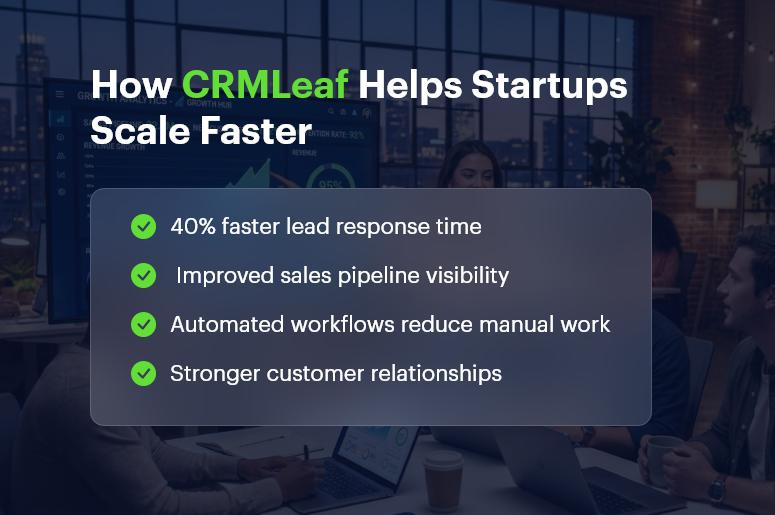
Why Startups Struggle Without CRM Software
In the early stages, many startups rely on spreadsheets, emails, or basic tools to manage their leads. While this may work initially, it becomes difficult to manage as the number of customers grows.
Common challenges include:
- Customer data is scattered across different tools
- Missed follow-ups with potential clients
- Limited visibility into the sales pipeline
- Difficulty tracking customer communication
- Lack of coordination among team members
These problems can slow down growth and reduce conversion rates. CRM software solves this by centralising customer information and improving workflow management.
Key Ways CRM for Startups Drives Faster Growth
1. Centralised Lead Management
Managing leads manually can quickly become overwhelming. A CRM system collects all leads in one dashboard, making it easier to organise and track potential customers.
Benefits include:
- Easy access to contact details
- Tracking of customer interactions
- Lead categorisation and prioritisation
This organised structure helps startups focus on high-value opportunities.
2. Efficient Sales Pipeline Tracking
Startups must track every stage of their sales process. A CRM platform provides visual pipelines that show where each lead is in the sales journey.
With proper pipeline management, startups can:
- Identify potential deals faster
- Predict revenue more accurately
- Monitor team performance
This transparency improves decision-making and sales efficiency.
3. Automation of Repetitive Tasks
Many startup teams spend significant time on repetitive tasks such as sending emails or scheduling follow-ups. Automation within CRM for startups reduces manual work.
Automated features may include:
- Email follow-ups
- Task reminders
- Lead assignment
- Customer notifications
Automation allows teams to focus more on strategy and customer relationships.
4. Better Customer Insights
Understanding customer behaviour is critical for growth. CRM tools track customer interactions and provide valuable analytics.
Startups can analyse:
- Customer engagement patterns
- Sales performance metrics
- Conversion rates
These insights help businesses refine marketing strategies and improve customer experiences.
5. Improved Team Collaboration
Startups often operate with small teams. Effective collaboration ensures everyone stays aligned on customer communication.
CRM systems provide shared dashboards where teams can:
- Track lead status
- Assign tasks
- Share customer notes
- Monitor progress
This transparency reduces confusion and improves productivity.
Real Startup Use Cases of CRM Software
Sales Team Lead Management
Sales representatives can store all leads and interactions in one system. This ensures no opportunity is overlooked during the sales process.
Marketing Campaign Tracking
Marketing teams can track how leads interact with campaigns. This information helps identify which strategies generate the best results.
Customer Support Management
CRM platforms help support teams access customer history quickly. This allows them to resolve issues faster and provide better service.
Data-Driven Decision Making
With analytics and reports, startup founders can understand which products, services, or campaigns perform best.
Key Features Startups Should Look for in a CRM
Choosing the right CRM platform is important for long-term success. Startups should consider the following features:
- Easy lead management tools
- Sales pipeline visualisation
- Workflow automation
- Analytics and reporting dashboards
- Mobile accessibility
- Integration with marketing tools
Solutions like CrmLeaf offer these capabilities while remaining user-friendly for growing businesses.
For example, CRM integrations help businesses connect their CRM with marketing and productivity tools. Platforms such as HubSpot and Salesforce also underscore the importance of integrated ecosystems for business growth.
Conclusion
Startups face numerous challenges when managing leads and customer relationships. Without a structured system, valuable opportunities may be lost.
Implementing CRM for startups helps businesses organise data, automate processes, and improve collaboration. With better visibility into customer interactions, teams can make informed decisions and scale faster.
Platforms such as CrmLeaf provide startups with powerful CRM tools designed to simplify sales and customer management.
By adopting the right CRM solution early, startups can build stronger relationships and accelerate sustainable growth.
Ready to run your entire business from one simple CRM? Visit CrmLeaf and start your free trial today — no credit card required, instant setup.
Frequently Asked Questions
1. Can startups really grow faster using CRM software?
Yes. CRM software helps startups organise leads, automate follow-ups, and track sales pipelines, which improves efficiency and accelerates growth.
2. Do startups need CRM software in the early stage?
Yes. Implementing CRM software early helps startups manage customer data properly and build scalable sales processes from the beginning.
3. Can CRM software improve lead management for startups?
Yes. CRM platforms centralise lead data, track interactions, and ensure that no potential customer opportunity is missed.
4. Does CRM software help startups automate sales tasks?
Yes. CRM tools automate tasks such as follow-up emails, reminders, and lead assignments, allowing teams to focus on closing deals.
5. Is CRM software useful for small startup teams?
Yes. CRM systems improve collaboration by giving teams shared access to customer data and sales activity tracking.
6. Can CRM software improve customer relationships for startups?
Yes. CRM platforms track customer interactions and help businesses maintain consistent communication with clients.